
Lovable Meets ChatGPT and Claude: The New Way to Build, Control, and Use Apps
Lovable is expanding beyond being an AI application development platform. Through Model Context Protocol, Lovable can now connect directly with tools such as ChatGPT, Claude, Cursor, VS Code, and Claude Code.

Written by FiftyFive Technologies
13,514 followers · Posted on July 24, 2026

AI clients manage Lovable
External AI clients can connect to Lovable and manage development projects through natural-language instructions.
Lovable apps reach AI users
Published Lovable applications can expose MCP servers so users can access app actions directly through compatible AI assistants.
This creates two important integration paths.
First, external AI clients can connect to Lovable and manage development projects. Second, applications built with Lovable can expose their own MCP servers, allowing users to access those applications directly through AI assistants.
For CTOs, product leaders, and sales teams, this changes how software can be developed, managed, distributed, and used.
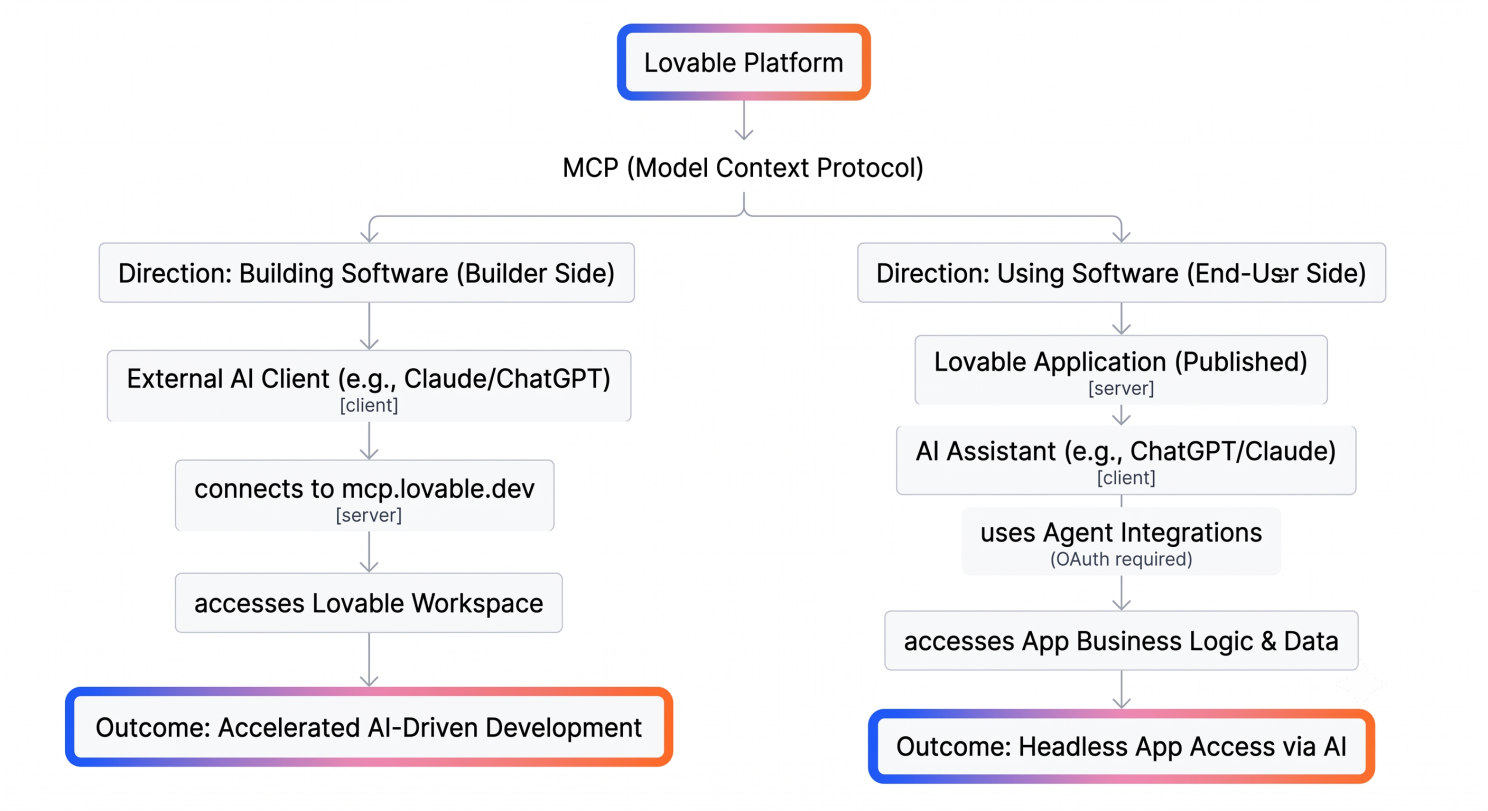
Lovable as an MCP Server
Model Context Protocol, or MCP, is an open standard that allows AI agents to discover and call external tools.
Lovable exposes its development platform as an MCP server through mcp.lovable.dev. Once connected, an AI client can interact with a Lovable workspace through natural language.
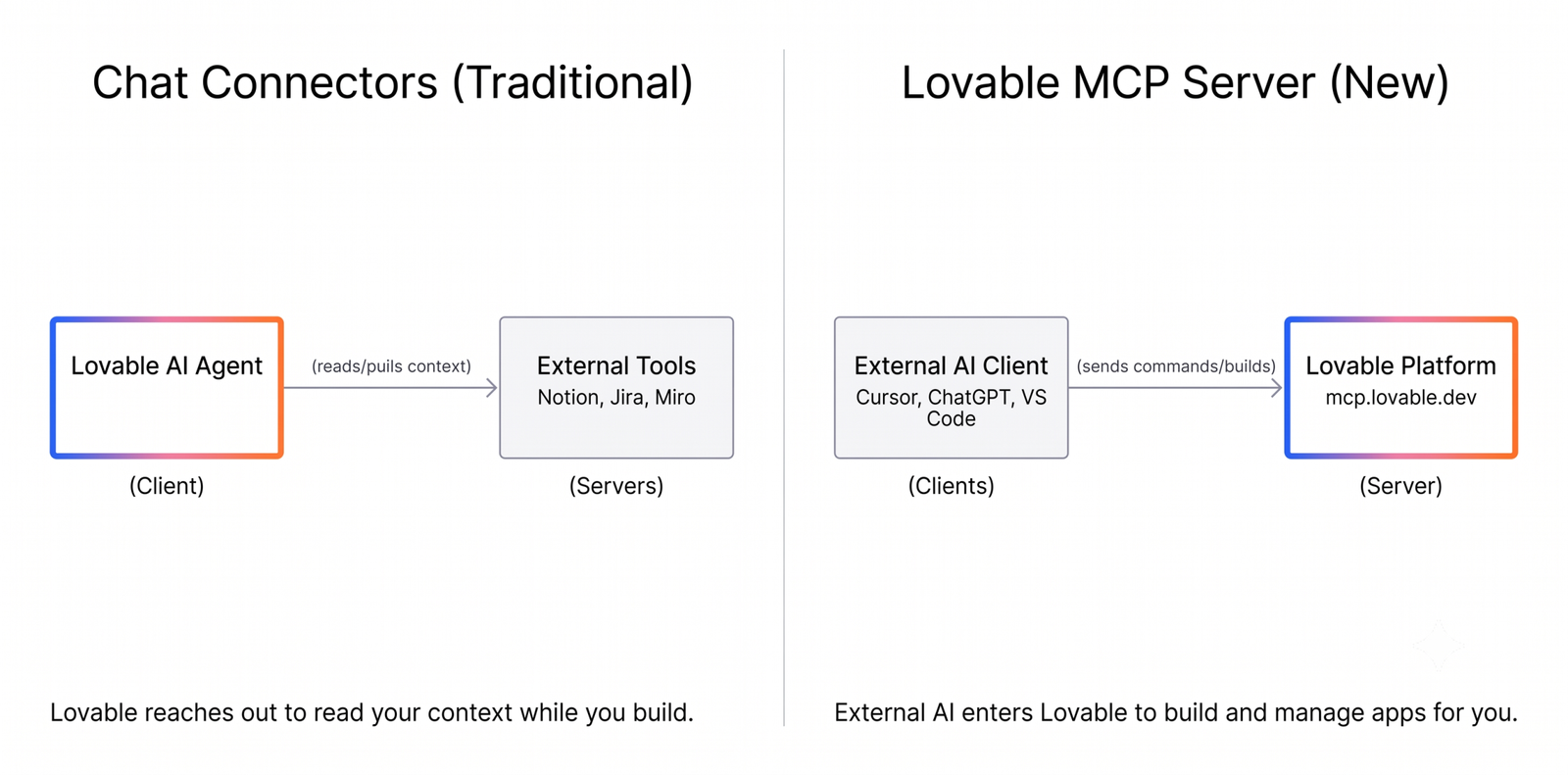
This is different from a chat connector.
A chat connector allows Lovable to communicate with an external service while building an application. Lovable’s MCP server reverses that relationship. It allows an external AI client to enter Lovable and manage projects on the user’s behalf.
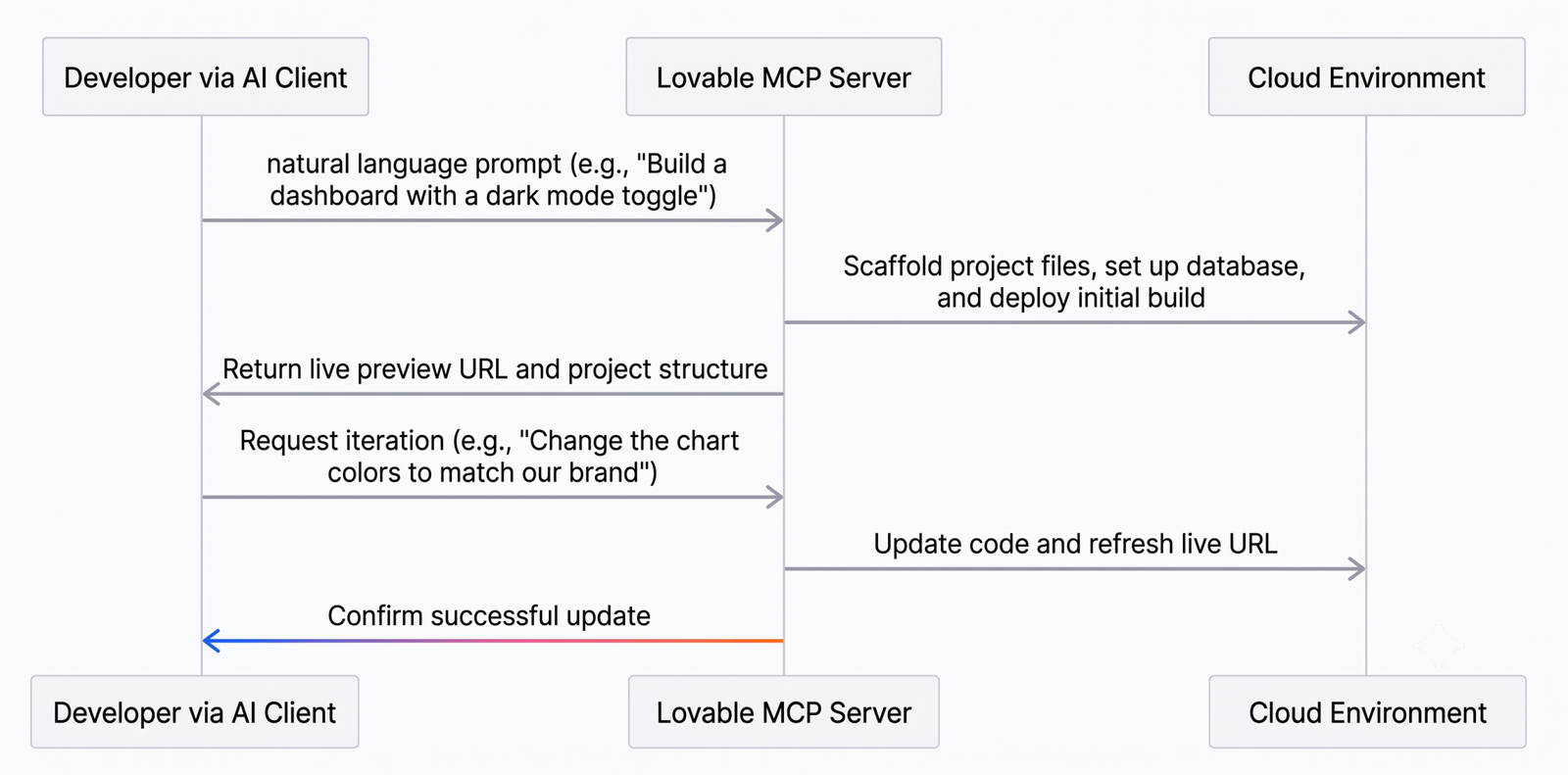
Once connected, an AI client can create projects from prompts, select templates or design systems, send iterative development instructions, attach files, and use plan mode before making changes.
It can also inspect project code through file listings, unified diffs, specific file content, and Git references. The client can manage projects, folders, visibility settings, knowledge bases, and deployments.
This means development teams can manage Lovable projects from the AI tools already used for planning, coding, reviewing, and documentation.
Turning Lovable Apps into AI-Accessible Products
The second use case works in the opposite direction.
A publicly published Lovable application can expose its own MCP server. This allows users to interact with the application from ChatGPT, Claude, or another compatible AI tool instead of opening the application separately.
When a user makes a request, the AI assistant reads a plain-language description of the actions supported by the application. It identifies the correct action, sends the request to the application, and returns the result.
For example, a Lovable application could allow an AI assistant to submit an expense, create a quotation, generate a report, review bids, query a sales pipeline, or evaluate marketing content against brand guidelines.
Because MCP is a shared protocol, one integration can make a Lovable application compatible with multiple AI tools.
Lovable can review the application’s logic and suggest which actions should be exposed through the MCP server. Product teams can then adjust the available actions and decide whether they should be accessible to everyone, signed-in users, or paying customers.
Lovable hosts the server, keeps it aligned with protocol updates, and connects it to the published version of the application. When the application is updated and republished, the MCP integration reflects those changes.
Security and Governance Considerations
MCP access should be treated as administrative access.
An external AI client connected to Lovable may be able to access the full workspace rather than a single project. CTOs should therefore connect only trusted clients and use plan mode for changes that require review.
Particular attention should be given to tools such as deploy_project, which can create a publicly reachable production URL, and query_database, which can run SQL with full database permissions, including schema changes.
Enterprise workspaces keep third-party MCP clients disabled unless an administrator enables them. This provides an additional governance layer before external clients gain workspace access.
A New Software Delivery Channel
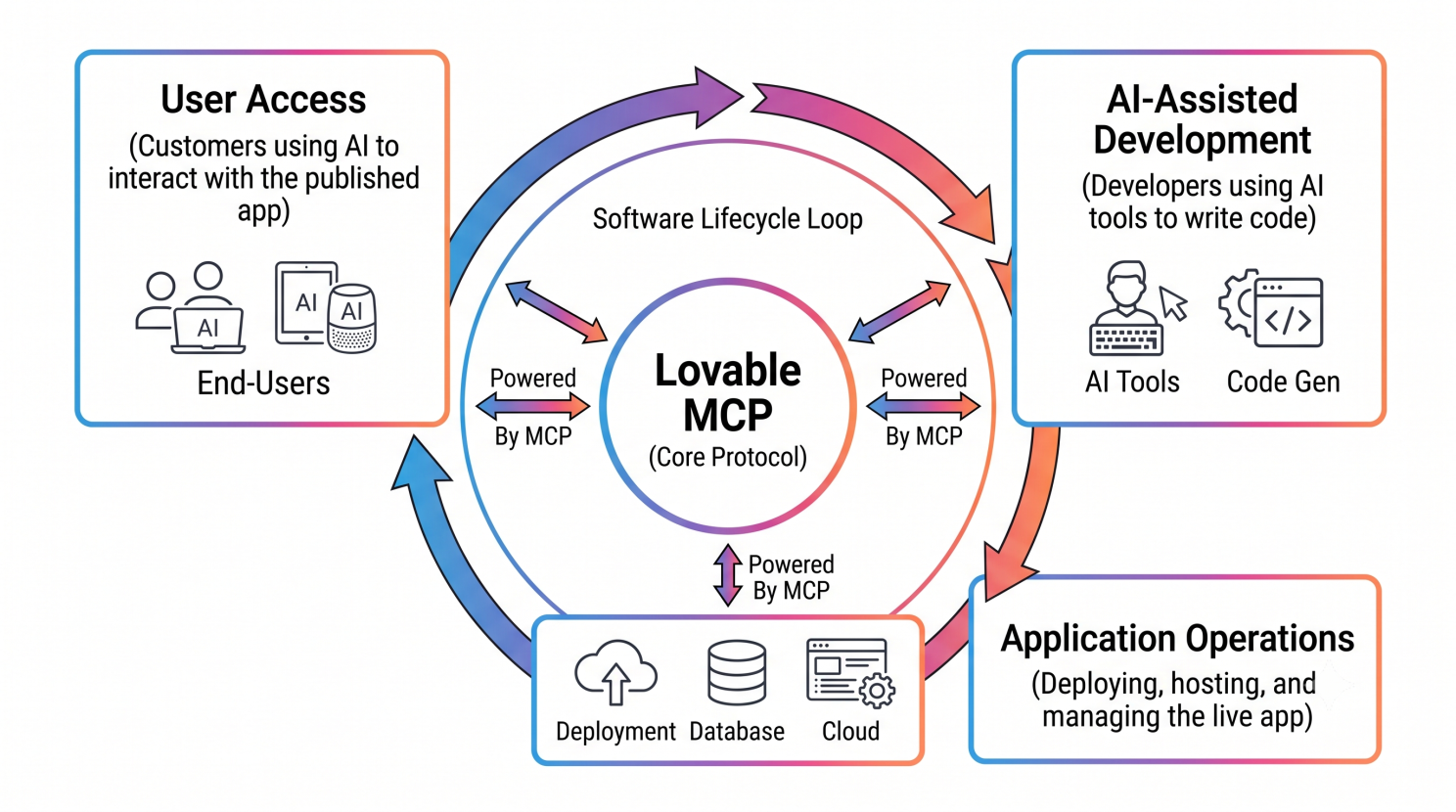
Lovable’s MCP capabilities connect three layers of the software lifecycle: AI-assisted development, application operations, and user access.
Engineering teams can manage Lovable projects through their existing AI clients. Product teams can make Lovable applications usable inside AI assistants. Sales teams can position these integrations as a way to bring business workflows directly into the tools customers already use.
For technology leaders, MCP is not simply another integration option. It creates a new interface through which software can be built, controlled, and delivered.
Ready to make your app AI-ready with FiftyFive?
Let’s connect and explore how MCP-enabled applications can bring business workflows directly into the AI tools your teams and customers already use.
sales@fiftyfivetech.io →
FiftyFive Technologies
AI · Software Engineering · Technology ConsultingFiftyFive Technologies helps businesses build and modernize software products with AI-enabled engineering, application development, integrations, cloud, data, and scalable digital platforms.