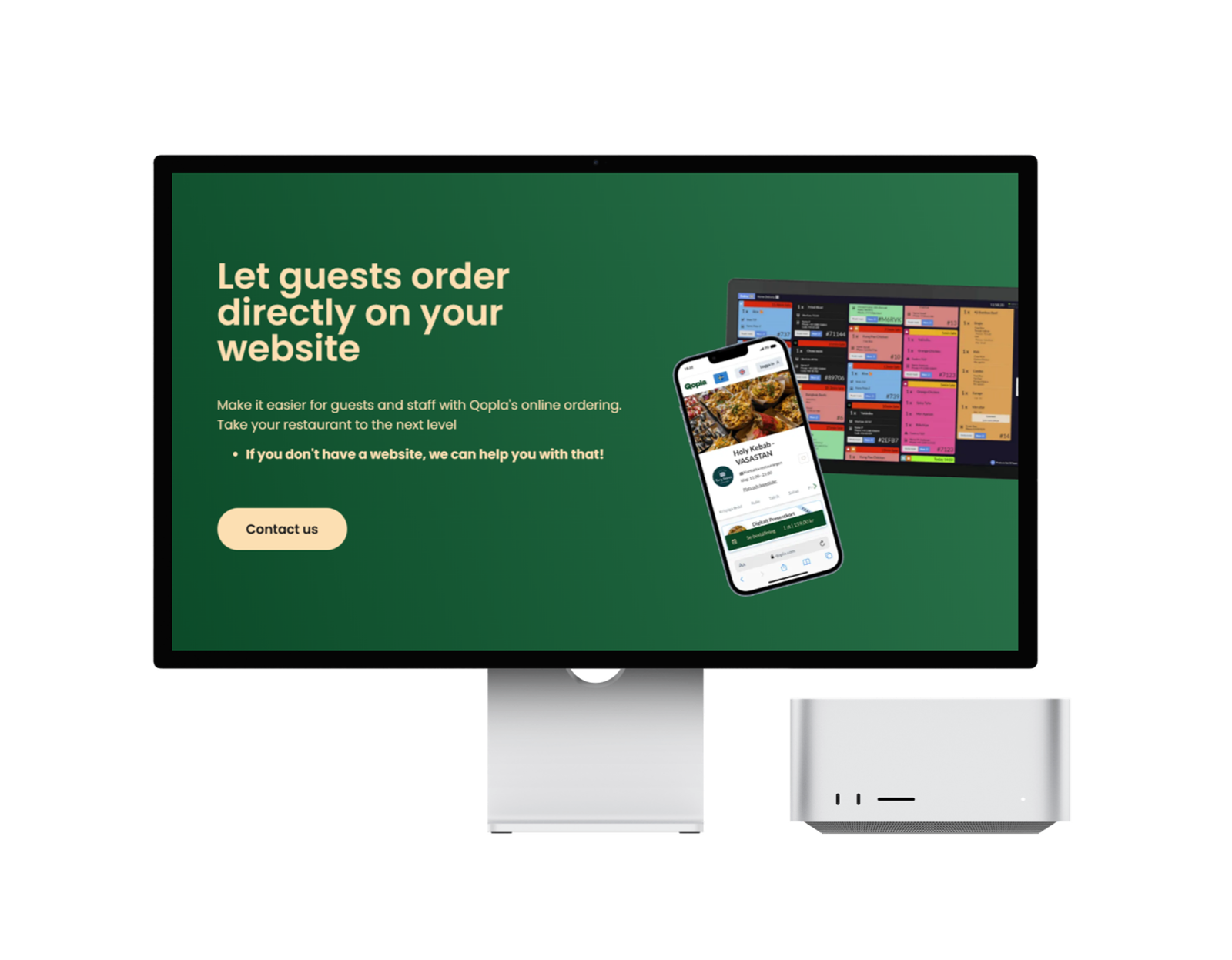
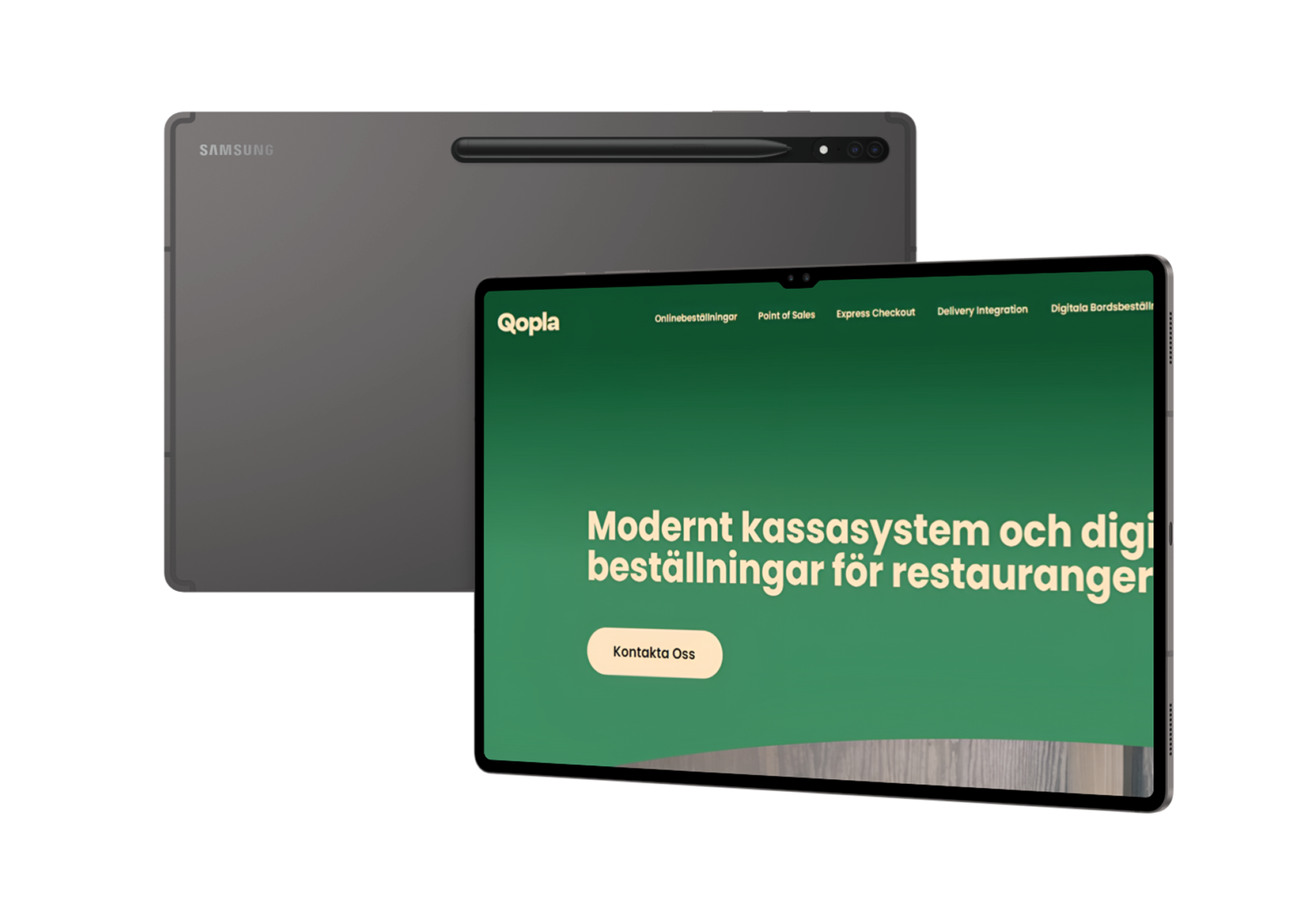
FiftyFive engineered Qopla’s core technology stack, from a custom POS and React Native applications to third-party order integrations, AI models for sales and inventory forecasting, and automated cloud infrastructure. Our engineering team handled development, DevOps, QA, and performance engineering to keep the platform reliable as transaction volumes grew.
Qopla is a fast-growing Swedish food-tech startup focused on improving how restaurants run and how guests are served. Its platform brings together order management, inventory optimization, and AI-driven insights in a single system. The goal: streamline day-to-day operations while elevating the customer experience across every channel.
FiftyFive Technologies understood our customers’ needs and designed a solution that significantly improved the user experience. We saw a clear increase in platform adoption. Highly recommend their team for any product-focused development work.
Sahir AhmedQopla, Founder & CTO
The Need
Challenges
Qopla needed to streamline fragmented restaurant operations — pulling orders from multiple third-party platforms into one system while predicting demand, controlling inventory, and staying reliable under heavy load. Solving this meant addressing both operational complexity and strict performance and security requirements.
Orders arrived from multiple third-party channels with no unified view, making them difficult to manage consistently and at speed.
Sales predictions were unreliable and inventory management was inefficient, leading to waste and operational guesswork.
The platform lacked personalized meal recommendations, limiting its ability to drive engagement and repeat business.
The system had to deliver consistent performance during high-demand periods without degradation or downtime.
Sensitive customer data had to be safeguarded, with compliance maintained throughout.
Our Approach
Solution
We set out to make Qopla both a product and a platform — a single system that connects fragmented order channels, turns operational data into accurate forecasts, and keeps performance steady when it matters most. The solution pairs a custom POS and hybrid mobile apps with machine learning for prediction and personalization, all underpinned by automated infrastructure and rigorous testing.
Custom software dev. (Mobile & Web App / DevOps)
Built a Restaurant Management System with a POS platform and hybrid mobile apps, then automated the infrastructure to keep it scalable and reliable.
POS platform and hybrid mobile apps built with React Native.
Integration of third-party order platforms into a single, unified system.
Infrastructure automation using Kubernetes and Jenkins for scalability and reliability.
AI-driven operations (Machine Learning)
Turned operational data into accurate forecasts and personalized experiences using machine learning.
Predictive sales analytics and real-time cooking estimates powered by XGBoost.
Machine learning models for personalized meal recommendations.
Inventory optimization driven by demand prediction.
Quality assurance and security testing
Ensured the platform stayed stable, secure, and ready for high-volume use.
End-to-end and integration testing.
Performance testing for peak-period reliability.
Security testing to protect customer data and support compliance.
Qopla now runs as a single, intelligent platform for restaurant operations — connecting fragmented order channels, forecasting demand, and personalizing the guest experience. The combination of a custom POS, AI-driven analytics, and rigorous QA delivered measurable gains in cost, efficiency, retention, and reliability.
Faster development
React Native development reduced costs by accelerating time-to-market and streamlining the build across mobile and web.
15% less food waste
AI-powered analytics improved inventory management, cutting food waste by 15% through better demand prediction.
20% retention
Personalized meal recommendations and seamless POS integration improved the user experience, driving a 20% increase in customer retention.
FoodTech software development creates digital products for restaurants, food businesses, delivery platforms, and hospitality operators. Solutions can include restaurant POS systems, mobile ordering apps, inventory management, kitchen workflows, delivery integrations, AI demand forecasting, customer analytics, and cloud infrastructure designed to improve operational efficiency and the customer experience.
A smart restaurant management system should include POS billing, multi-channel order management, menu and inventory control, kitchen workflows, reporting, customer management, and role-based access. Advanced platforms may also provide delivery integrations, AI demand forecasting, personalized recommendations, automated alerts, multi-location management, and real-time operational dashboards.
Restaurants can manage orders from multiple delivery platforms by connecting each channel to a centralized POS or order management system through APIs. The software standardizes incoming order data, displays every order in one interface, synchronizes order statuses, and reduces manual entry, missed orders, processing delays, and inconsistent kitchen workflows.
Custom restaurant software is designed around a business’s specific workflows, integrations, scaling requirements, and customer experience, while an off-the-shelf POS provides standardized features for common operations. Custom development is better suited to unique ordering journeys, complex third-party integrations, AI capabilities, or centralized control across multiple restaurant locations.
AI demand forecasting helps restaurants predict future orders, menu-item demand, and preparation requirements using historical sales and operational patterns. These forecasts support better purchasing, staffing, cooking, and inventory decisions. Machine learning models such as XGBoost can also generate real-time estimates that reduce guesswork during busy service periods.
AI-powered inventory management reduces restaurant food waste by aligning stock purchases and food preparation with predicted customer demand. It can identify likely shortages, excess inventory, and changing consumption patterns before they affect operations. In this project, demand-driven inventory optimization contributed to a 15% reduction in food waste.
AI personalizes the restaurant customer experience by analyzing previous orders, preferences, menu behavior, and contextual data to recommend relevant meals or offers. Personalized suggestions make ordering easier and can encourage repeat purchases. In this project, machine learning recommendations and smoother POS interactions contributed to 20% higher customer retention.
Restaurant mobile apps and POS platforms can use cross-platform frameworks, APIs, cloud services, databases, and automated deployment tools. React Native supports Android and iOS application development, while technologies such as Kubernetes, Jenkins, and machine learning libraries can support scalable infrastructure, reliable releases, predictive analytics, and intelligent restaurant operations.
Custom restaurant software can scale across multiple locations and peak hours when it uses centralized cloud services, scalable infrastructure, reliable APIs, monitoring, and performance testing. Container orchestration can adjust capacity as demand changes, while location-level configurations help restaurants manage growing order volumes, menus, users, devices, and integrations consistently.
Restaurant POS software should use encrypted communication, secure APIs, strong authentication, role-based permissions, audit logging, monitoring, and regular security testing. Sensitive payment, customer, employee, and operational data should be protected during storage and transmission, while third-party integrations must follow applicable privacy, payment, and data-handling requirements.
The cost and timeline for restaurant management software depend on the number of applications, POS features, delivery integrations, AI capabilities, transaction volume, security requirements, and testing scope. A focused MVP may take around 8–10 weeks, while a complete multi-channel restaurant platform can require several months and should be estimated after discovery.
Look for a FoodTech software development company that combines custom software, mobile and web apps, POS integrations, AI and machine learning, DevOps, and quality assurance. The partner should understand restaurant workflows, peak-hour performance, data security, third-party integrations, scalable architecture, flexible engagement models, and post-launch product support.
We use cookies to personalise content and ads, to provide social media
features and to analyse our traffic. We also share information about
your use of our site with our social media, advertising and analytics
partners who may combine it with other information that you’ve provided
to them or that they’ve collected from your use of their services.
Necessary cookies help make the website usable. Analytics cookies help
us understand how visitors interact with the website. Marketing
cookies may be used to deliver relevant ads and measure campaign
performance.
Necessary cookies
Required for core website functionality. These cannot be
disabled.
Analytics cookies
Helps us measure traffic and improve website performance.
Marketing cookies
Used for advertising, remarketing, and campaign tracking.