FiftyFive Tech

Email Us sales@fiftyfivetech.io
Get in Touch
Case Study | Diagnostic Test Booking Platform

Self-Service Diagnostic Test Booking Platform for a Healthcare Provider

Custom Software Development Cloud Engineering Third-Party Integrations Workflow Automation

FiftyFive Technologies built a self-service healthcare booking platform that enables patients to browse diagnostic tests, find nearby clinics, book appointments, and make secure online payments through a seamless flow. The platform also automated the complete order lifecycle, including payment processing, clinic slot reservations, test order creation, and result delivery.

Build Your Platform With Us
The Client

Overview

The client is a healthcare services provider operating a network of diagnostic centers. The organisation set out to modernise its operations by digitising test booking, payment collection, and result management on a single scalable web platform. With no in-house engineering function, the client needed a delivery partner capable of owning architecture, build, integration, and deployment end to end. FiftyFive Technologies was engaged to deliver that platform from the ground up.

The Need

Challenges

Digitising a diagnostic business meant connecting a patient-facing booking journey to a chain of independent third-party systems that were never designed to work together. Every booking had to survive a multi-step asynchronous workflow without dropping data, double-charging a patient, or losing a clinic slot.

  • FiftyFive had to integrate the Randox Booking API, Randox Ordering API, Stripe, Airtable, and AWS Location Service, despite differing data models, authentication schemes, and error behaviour.
  • Payment confirmation, clinic slot reservation, test order creation, and status and result polling had to be sequenced reliably even when individual calls timed out, failed, or returned late.
  • Bundled test packages, optional add-ons, channel-specific prices, and variable margins had to be calculated at request time and carried accurately into payment.
  • Stripe payment truth, Randox clinical order truth, and Airtable business reporting truth had to remain synchronised through scheduled reconciliation.
  • Continuous synchronisation and polling required dependable scheduling, structured logging, and explicit error handling so silent failures did not become missing patient results.
Our Approach

Solution

FiftyFive Technologies built the platform as a service-oriented backend fronted by a single API gateway, so every third-party dependency sits behind one controlled entry point. Each stage of the booking lifecycle runs as a discrete service, coordinated by a queue-and-scheduler layer that handles asynchronous work between patient action and lab result. The containerised AWS deployment gives the client room to add tests, clinics, and integrations without re-architecting.

Centralised API gateway

FiftyFive built a unified gateway in Express.js that consolidates every outbound third-party call into a single controlled layer.

  • Routes Randox Booking, Randox Ordering, Stripe, Airtable, and AWS Location Service traffic through one entry point.
  • Normalises inconsistent response formats from external providers into internal contracts.
  • Centralises authentication, request logging, and error surfacing rather than duplicating them per integration.
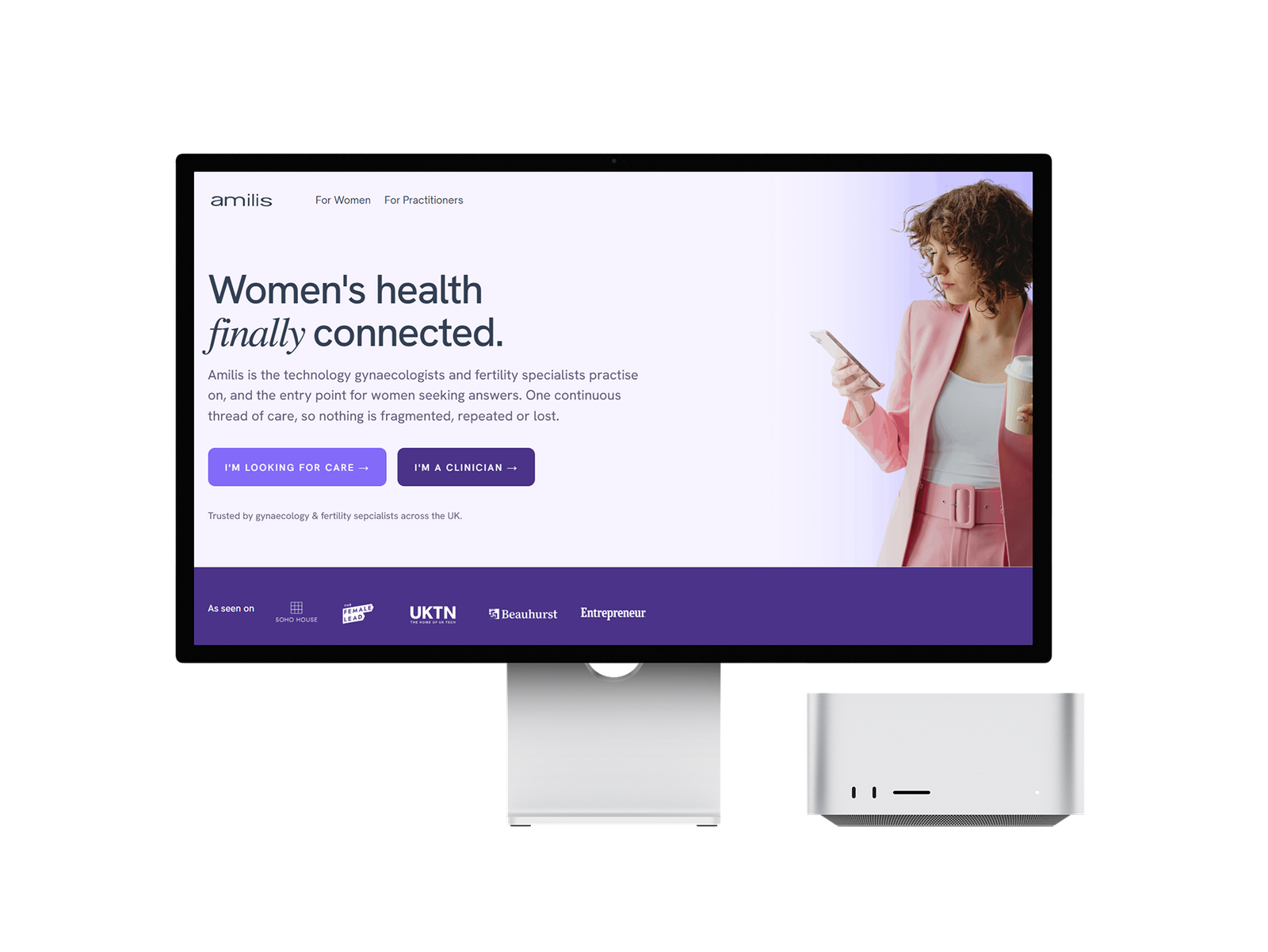
Healthcare booking platform preview

Service-oriented architecture

FiftyFive separated the platform into modular services aligned to the booking lifecycle, so each stage can be changed or scaled independently.

  • Discrete services for booking, ordering, payments, and data synchronisation.
  • Clear service boundaries allow new diagnostic tests and integrations without touching unrelated modules.
  • Modular structure supports independent debugging and deployment per service.
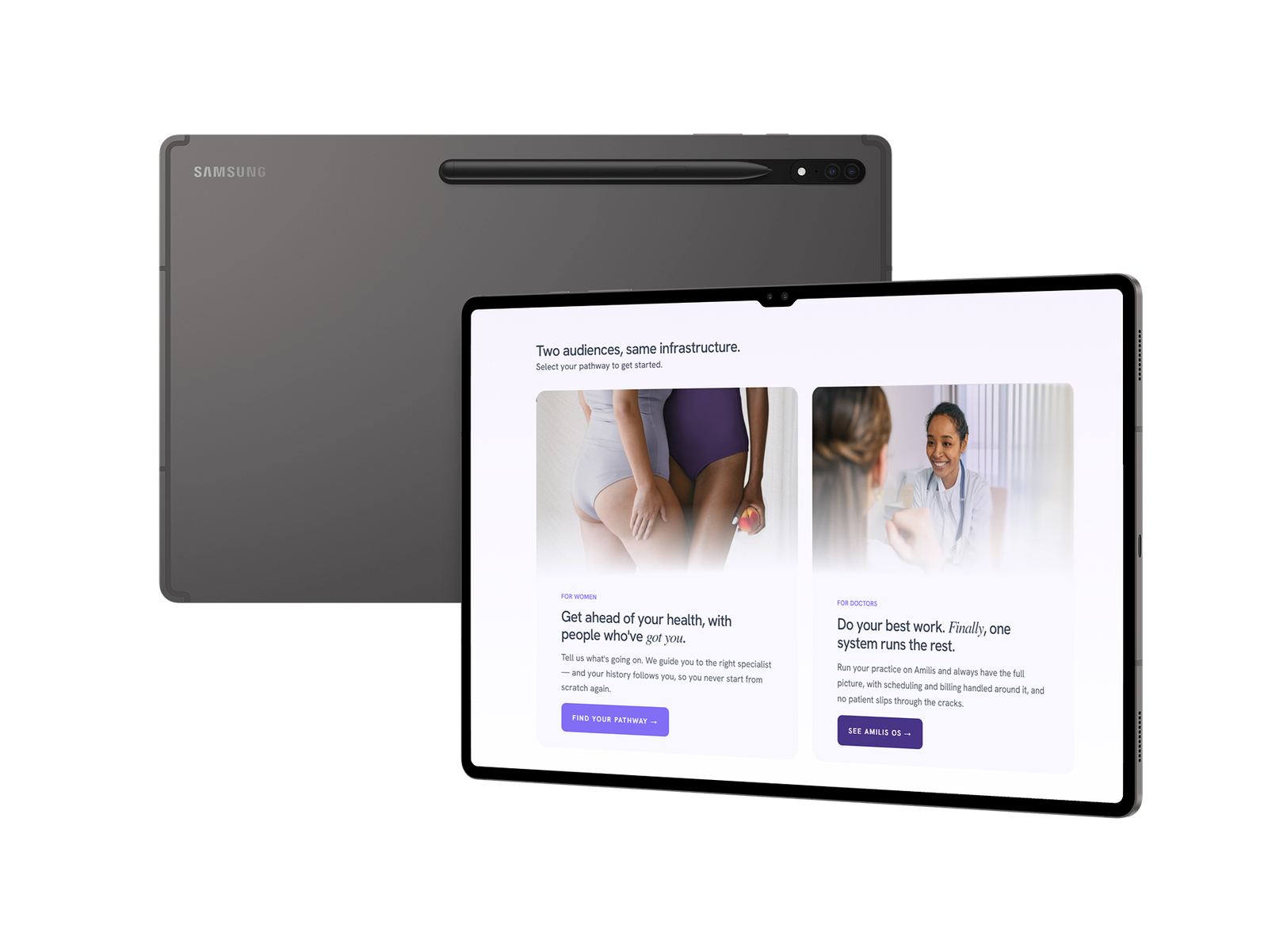
Diagnostic test booking interface preview

Asynchronous workflow automation

FiftyFive used Redis for temporary data storage and queuing, with Node-Cron driving scheduled orchestration across the booking chain.

  • Redis holds in-flight booking state between payment confirmation and order creation.
  • Node-Cron jobs poll clinic and lab systems for status changes and result availability.
  • Scheduled reconciliation keeps Stripe, Randox, and Airtable records aligned.
  • Structured logging and error handling catch failures in every background job.

Dynamic pricing and payment engine

FiftyFive built a pricing engine that resolves the correct cost at request time and carries it cleanly into checkout.

  • Calculates base test cost, bundled packages, add-ons, and applicable fees per request.
  • Creates Stripe Checkout sessions automatically with the resolved amount.
  • Embeds reconciliation metadata so payments can be matched to bookings and lab orders.

Resilient integration layer

FiftyFive hardened every external dependency so that a third-party failure degrades gracefully instead of breaking the booking.

  • Retry logic on failed calls to external providers.
  • Automatic token refresh prevents expired-credential failures mid-workflow.
  • Explicit API error handling records failure states for operational follow-up.

AWS deployment with Docker

FiftyFive containerised the platform and deployed it on AWS for scalability and maintainability.

  • Docker containers provide consistent, reproducible environments across the service set.
  • AWS hosting provides headroom for booking volume growth.
  • Containerised structure simplifies ongoing maintenance and future service additions.
Technology

Tech Stack

Backend

Express.js

Runtime

Node.js

Caching & Queuing

Redis

Scheduling

Node-Cron

Cloud

AWS

Containerisation

Docker

Payments

Stripe
Experts

Team

4

Project Team Members

The Impact

Results

Project Duration-

FiftyFive automated the entire diagnostic test booking lifecycle, from patient checkout through to result delivery. The platform removed the manual coordination that previously sat between payment, clinic, and lab, and gave the client a consolidated view of sales, orders, and results for the first time.

70% less manual effort

FiftyFive automated the booking-to-result workflow, removing manual coordination across payment, clinic scheduling, and lab order handling.

40% faster turnaround

Real-time order synchronisation between Stripe, Randox, and Airtable shortened booking-to-result cycle time and improved patient satisfaction.

Fewer operational errors

Automated orchestration and reconciliation replaced manual data entry, reducing transcription and status errors affecting diagnostic order accuracy.

Real-time business intelligence

Consolidated Airtable reporting gave the client live visibility into sales, orders, and results for operational and commercial decisions.

Support

FAQs

A healthcare booking platform is a digital system that lets patients browse services, find nearby clinics, reserve appointments, and pay online without calling or visiting reception. For diagnostic providers, it typically also automates payment capture, clinic slot reservation, lab order creation, and result delivery so bookings process without manual staff intervention.

Building a diagnostic test booking system requires connecting a patient-facing booking journey to clinic scheduling, lab ordering, and payment systems through a controlled integration layer. FiftyFive builds these as service-oriented backends behind a single API gateway, with a queue and scheduler layer handling the asynchronous work between patient checkout and result availability.

The main challenges are inconsistent data models, differing authentication schemes, and the absence of a shared transaction identifier across systems. Payment platforms, clinic booking systems, and lab ordering APIs each define records differently. Healthcare platforms need a normalisation layer, retry logic, token refresh handling, and scheduled reconciliation to keep records consistent.

Workflow automation removes the human handoffs between payment, scheduling, and lab ordering. Instead of staff re-entering booking details into separate systems, a queue-and-scheduler layer sequences each stage automatically and polls for status changes. FiftyFive's healthcare booking platform reduced client manual effort by 70% using this approach.

Yes. Stripe integrates with healthcare booking platforms through Checkout sessions created at request time with the calculated test price. Embedding reconciliation metadata in each session allows payments to be matched back to specific bookings and lab orders, which is essential when payment, clinical, and reporting data live in separate systems.

Node.js with Express.js suits healthcare booking platforms because the workload is integration-heavy and I/O-bound rather than computation-heavy. Redis handles in-flight booking state and queuing, Node-Cron drives scheduled polling and reconciliation, and Docker on AWS provides containerised deployment that scales as booking volume and test catalogues grow.

Asynchronous workflows are handled by holding in-flight state in a queue and running scheduled jobs to advance each stage independently. In a diagnostic booking chain, payment confirmation, slot reservation, order creation, and result polling each complete on different timelines, so the platform must own the sequence rather than depend on synchronous API responses.

Data consistency is maintained through scheduled reconciliation jobs that compare records across each system of record. When a payment platform, a lab ordering system, and a reporting database each hold part of the truth, cron-based synchronisation with structured logging and explicit error handling prevents silent divergence between finance, clinical, and operational data.

Yes, when built on a service-oriented architecture. Separating booking, ordering, payments, and data synchronisation into discrete services allows new diagnostic tests, clinics, and third-party integrations to be added without re-architecting the platform. Containerised deployment on AWS provides the infrastructure headroom to absorb rising booking volume.

Cost depends on the number of third-party integrations, the complexity of pricing logic, and whether the scope covers frontend, backend, or both. FiftyFive bills monthly on actual man-hours rather than fixed-scope estimates, and offers a two-week free proof of concept so healthcare providers can validate the approach before committing budget.

Timelines depend on integration count and workflow complexity, since each external system adds normalisation, error handling, and reconciliation work. FiftyFive begins with a two-week free proof of concept to establish integration feasibility, then scopes delivery phases against a validated architecture rather than an untested estimate.

Yes. FiftyFive provides dedicated healthcare software development teams combining solution architects, backend engineers, and DevOps specialists. With 300+ professionals across offices in India, the UK, Sweden, and the UAE, FiftyFive offers time-zone-aligned delivery and flexible engagement models for healthcare providers without in-house engineering capacity.

Get in touch

Contact Us

Book a call or fill out the form below and we’ll get back to you once we’ve processed your request.

    By submitting this form, you agree that FiftyFive Technologies may process your information to review your request and contact you. Read our Privacy Policy for more details.